

The recent arrival of a hippopotamus in the Potchefstroom area sounds as farfetched as can be, but is true! Before this one appeared, the last wild hippos were killed in the area during the last quarter of the 19th century.
One of the two main fountains supplying water to the Mooi River is on the farm Gerhard Minnebron named after the fountain. Loosely translated it is “Gerhard’s beloved fountain”. The owners of Gerhard Minnebron found hippo teeth in the fountain.
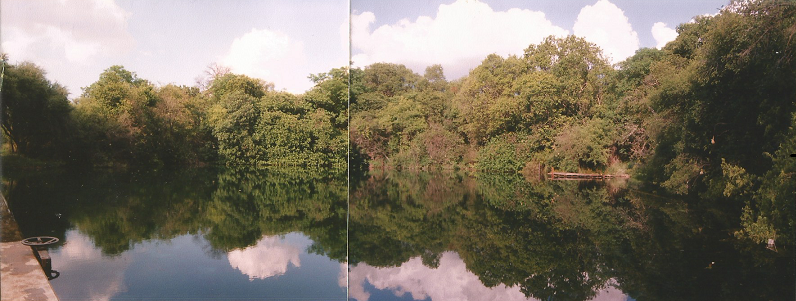
The lake at Gerhardminnebron where the hippo teeth were found.
Pet hippo
Around the turn of the 20th century, somebody in Potchefstroom, however, owned a hippo and kept in an enclosure. The photographer August D’Ange D’Astre took a picture of this hippo. Nothing more is known about this specific hippo.
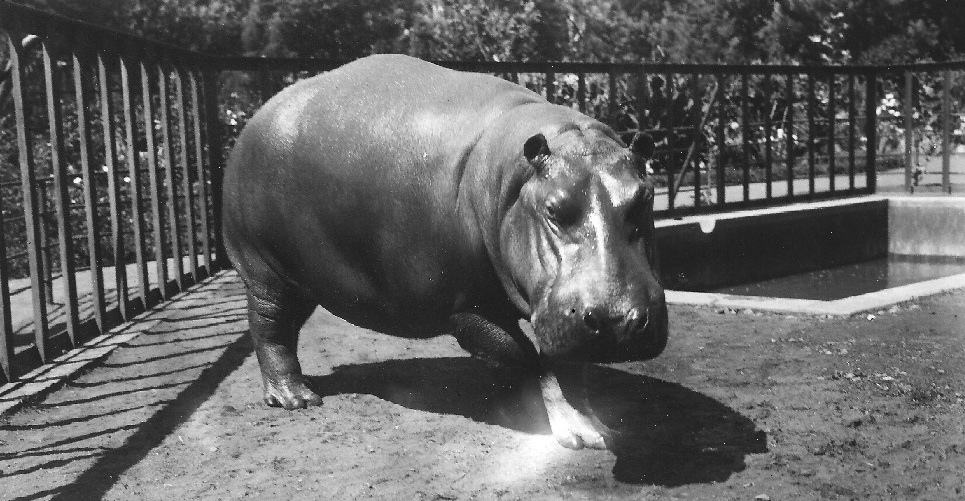
The D’Astre photo of the hippo.
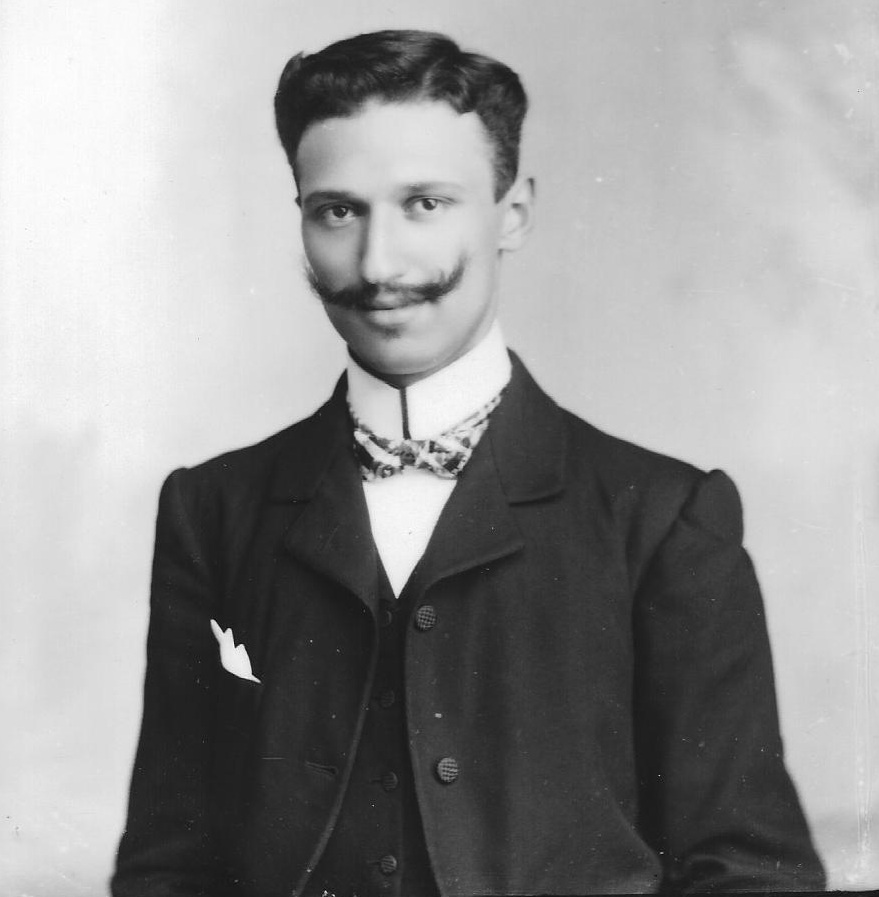
August D’Ange D’Astre (1872-1955) had a studio in Wolmarans Street next to the Church Square. His house was next door. D’Astre was a prolific photographer who arrived in Potchefstroom during or shortly after the Anglo Boer War. The hippo photo is part of a private collection of his photos that were taken from about 1903 onwards. The larger portion of his collection of glass slides is in the Potchefstroom Museum.
When the first Europeans settled here in 1838, this was a wild country. I included an article in my book, Stories of Potchefstroom, which also appeared in the Herald. It was originally published in Afrikaans, but here is the English version:
Compulsory hunting on Saturdays
About twenty years after Potchefstroom was founded, about 1858, the young men of the town were commanded to kill the “wolves” in the area. This compulsory hunt took place on Saturdays. This is according to A.J. van der Walt in Vastrappers.
It was terrible how they howled near the rivers. Once they caught a calf on the market square.
What Van der Walt called a wolf – an animal which is not endemic to South Africa – might have been wild dogs or jackals.
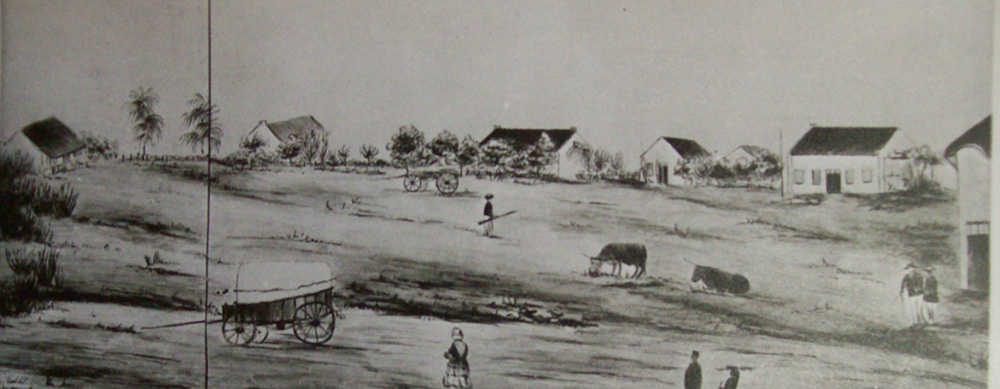
This depiction of the Market Square was made by Marion Churchill and dates from 1854. Photo: Potchefstroom Museum
The market square was on the block between Wolmarans, Gouws (Sol Plaatjie), Kerk (Walter Sisulu) and Potgieter (Nelson Mandela) Streets. The town hall was built on the square in 1909, followed by the 1938 monument commemorating the centenary of the Great Trek, the municipal building (fronting on Wolmarans Street) and the Dan Tloome Chambers.
One of the pioneers of Potchefstroom was Christoffel Lombard , who owned the farm Elandsheuwel, later owned by the Grimbeek family. He arrived in Potchefstroom about 1849. The Herald published a biography of Lombard on 18 December 1908. He related some wild, but true, lion-hunting experiences.
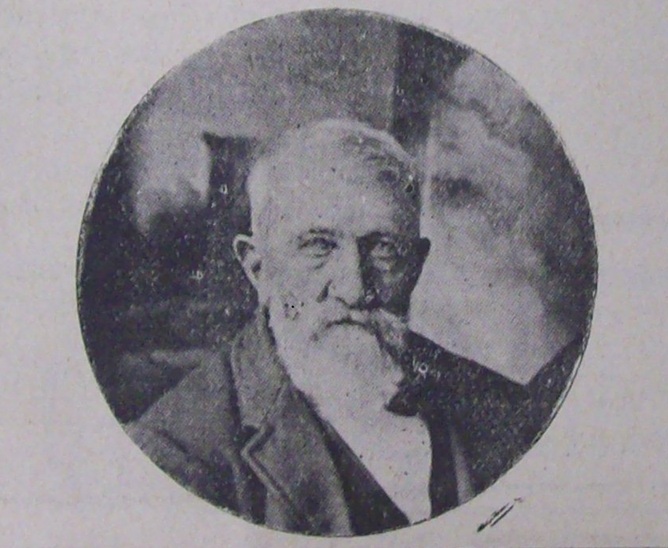
This photo of Christoffel Lombard accompanied the Herald article of 18 December 1908.
Eight lions killed near Feather Hill
Lombard was involved in a thrilling lion hunt in about 1850, thus 12 years after the founding of Potchefstroom, when eight lions were killed. This happened 15 minutes on horseback from the East Bridge (the bridge over the Mooi River north of the MooiRivier Mall) and about 5 minutes walking distance from the homestead of Captain Baillie. This stood next to MC Roode Drive, just across from the turn-off to Roots. There was a low hill where the eight lions were killed. The hills were known as “Baillie’s Kopjes”. This appears to be where The Feather Hill Boutique Hotel is situated now.
About three years later another lion hunt took place.
It became known that a lion went into hiding in the large reed bush south of town. The Herald told the story:
One morning a boy came into the village to say that a lion had been seen near the River where the South Bridge now stands, and Mr. Lombard relates how he joined the hunters who went after the King of Beasts. The party spread out, and it was the fortune of Stoffel (Lombard) to come in view of the lion standing among the reeds. His horse plunged so much with fright that a rifle shot was out of the question, and just as he feared a charge, the lion sprang from the reeds, and jumping clear across the river, within 15 yards (about 15 meters) from the startled horseman, disappeared from view.
Christoffel Lombard also had an encounter with a lion near Vaalkop in the Vredefort Dome. This tale is told in Vastrappers. Accompanied by an Englishman, he went there to saw wooden posts. While the Englishman was chopping down trees, Lombard walked to a nearby clump of trees and surprised a pride of lions. Lombard ran away, but was pursued by a lioness. He was not able to outrun her. The Englishman was completely frozen in fright. Lombard shouted to him to prepare himself to kill the lioness with the axe when she jumps at him. “Her majesty, however, sat down near the two men. She rubbed her backside and stared at them with glittering eyes.” After a while she jumped up and ran back where she came from.
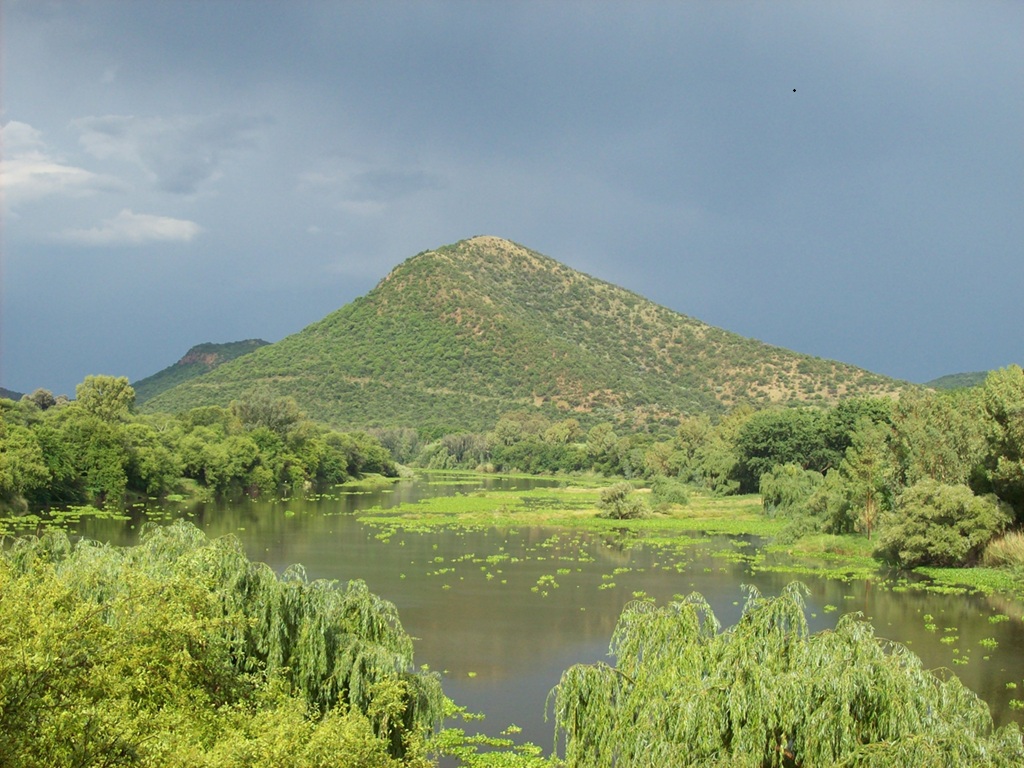
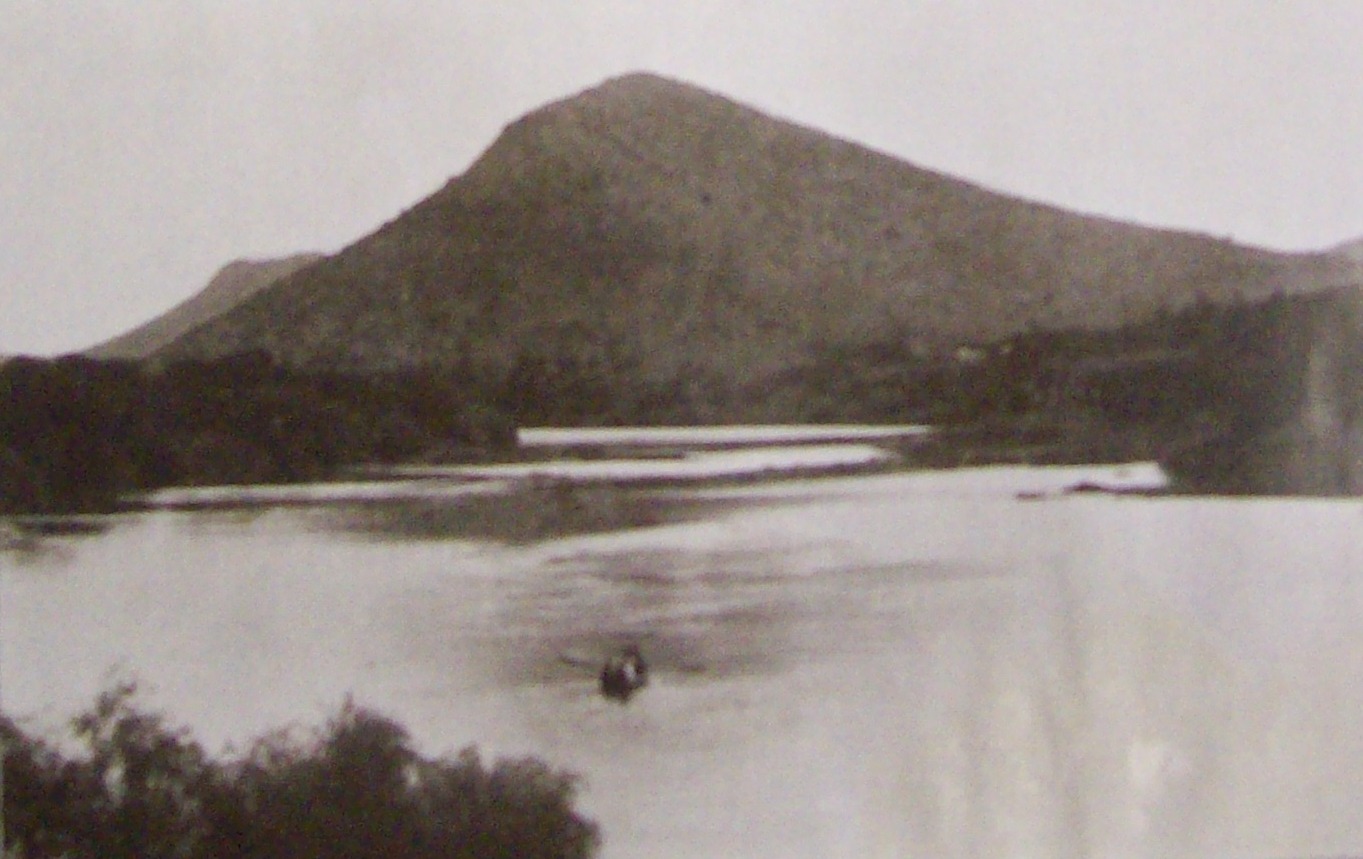
Vaalkop is one of the higher hills in the Vredefort Dome. It is situated in the vicinity of Venterskroon. I took the coloured photo in 2009. The black-and-white photo appeared in a tourist brochure called Beautiful Potchefstroom, that was published in 1913. My photo appeared to have been taken from the exact same place as the 1913 photo, although completely unintentional.
Lombard himself told another version of the story to the Herald:
Another lion experience was at Kromdraai. Going from the wagons at daybreak one morning to cut wood, Mr. Lombard suddenly found himself in the vicinity of a number of brutes. A lioness, evidently fearful for her cubs, and more bold than the rest made towards the intruder. His only weapon being a hatchet, he thought discretion was the better part of valour, and retreated gradually toward the camp, where he had a manservant. This individual, seeing the lion approaching, set up such a shout of terror that the animal turned tail and made of into the bush at top speed.
The farm Kromdraai is situated on the Vaal River west of the road to the Schoemansdrift Bridge, where the river turns three times.
What about the hippo?
The Potch hippo made his appearance on 9 May at the Boskop Yacht and Aquatic Club when it spotted an early riser and made chase. Johan Greyling, the unfortunate guy, sprinted towards his rondavel and was able to get to safety with seconds to spare. In spite of a thorough search, the hippo could not be found. It appeared that the hippo hid in a thick reed bush near the clubhouse. A day later the hippo was spotted at the TangleWood Nature Estate. Drones were employed to search for the hippo, but without any success.
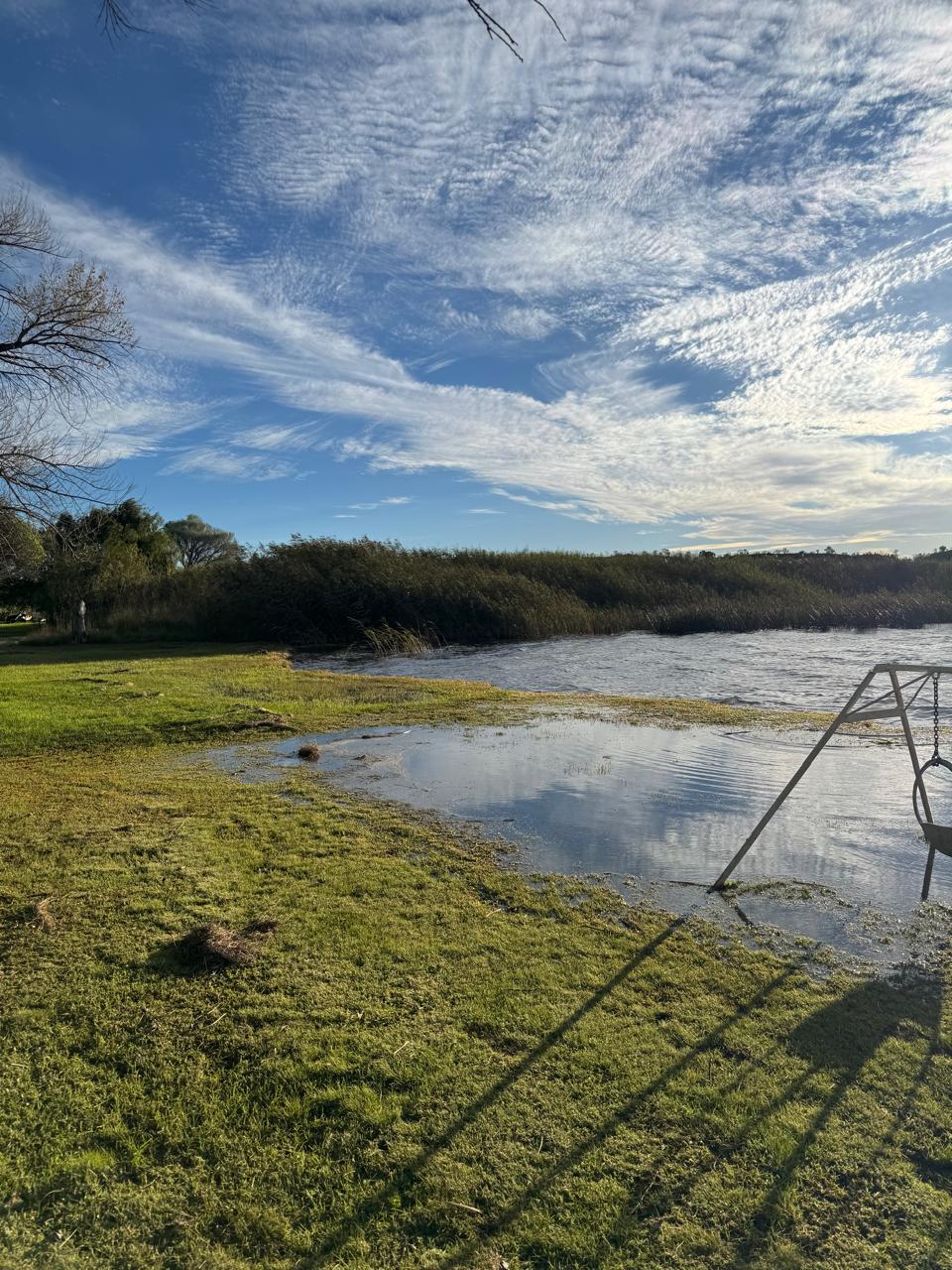
The reed bush at Boskop where the hippo took refuge is about 20 meters from the club house at the Boskop Yacht and Aquatic Club. Photo: Hans Gouws
The next day the Herald published a report on the hippo-sighting and posted a link on their Facebook page of the Herald. A commenter wrote that the hippo was previously spotted upstream near the Klerkskraal Dam and that the husband of the lady who posted the comment, recorded a video.
A few days after the TangleWood sightings, the hippo was spotted downstream at the smallholding of Mrs. Elizma Fuller, where it broke through a fence on 11 May and a footprint of the hippo was found. This is according to the Herald on 12 May.
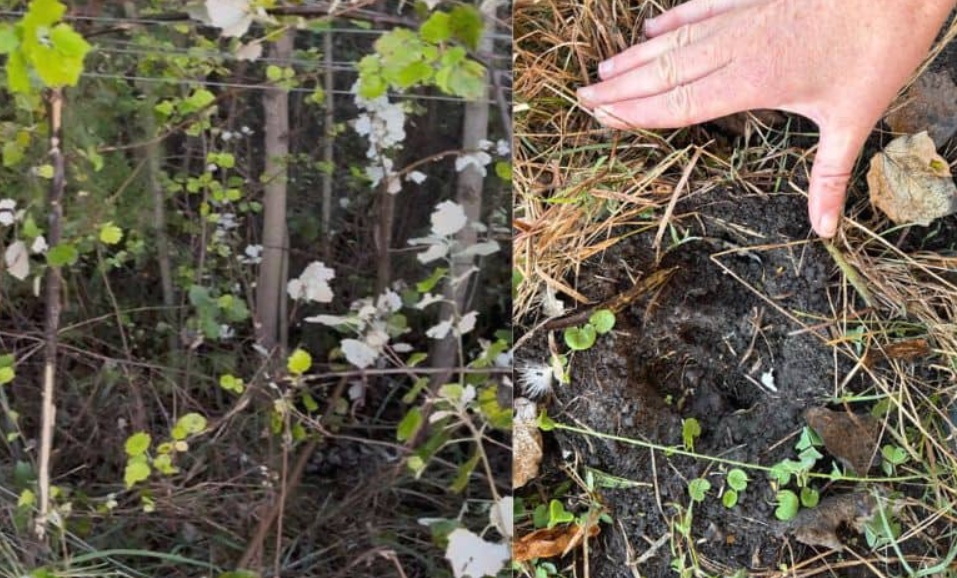
The photo of the broken fence and the footprint of the hippo that accompanied the Herald article of 12 May. It appears that the footprint is quite small and that the hippo might be a young animal.
It now appears that the hippo has moved downstream from the Boskop Dam and was last spotted on a small-holding next to the river.
Resolving the hippo situation seems to provide much head-scratching. Darting a hippo appears not to be an option to try to capture it. The hippo would rush into the water and would drown in its drugged state.
Thus, the hippo saga of Potchefstroom still continues.
