

Sports Village – Olympic medal champ
This article was compiled as a commission from the NWU, Records, Archives and Museums and is published here with their permission.
The Sports Village, built in 2010, stands next to the Fanie du Toit Sports Grounds of the North-West University Potchefstroom Campus. It is quite unique in the sense that it is probably the only guest facility owned and operated by a university built with the purpose as accommodation for athletes.
Fifteen years later and counting many successful athletes as guests, a saying emerged between the staff which says that the Sports Village has won more Olympic medals than the South African team!
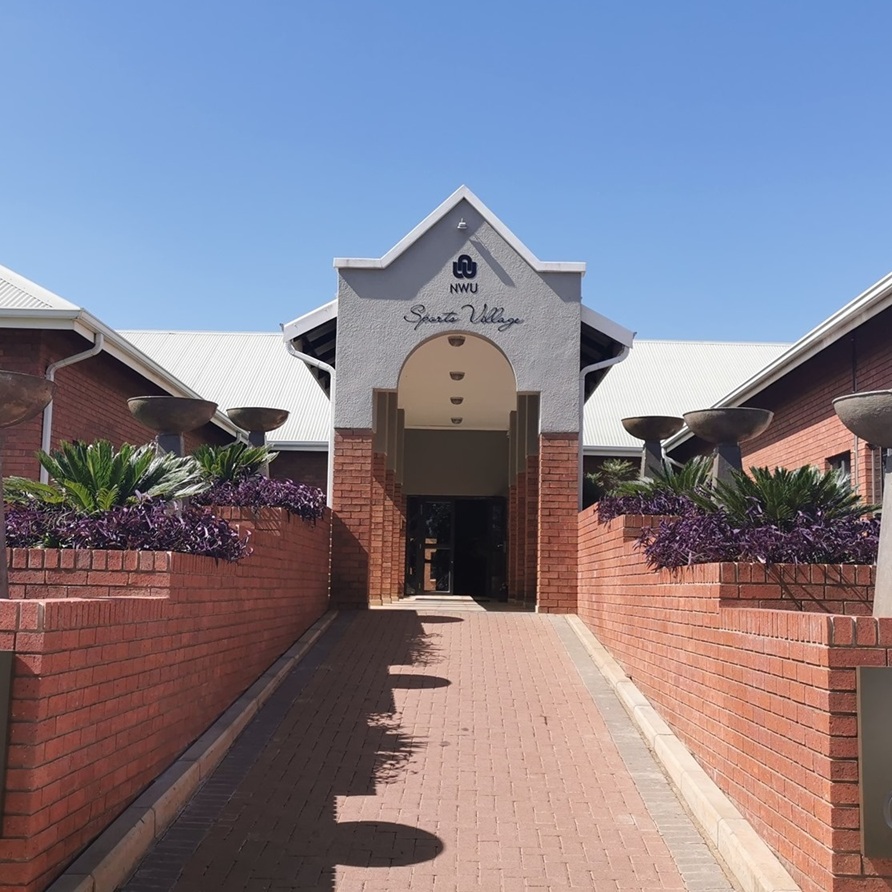
The Sports Village was built next to the Fanie du Toit Sports Grounds, with all its amenities within walking distance. South of the Sports Village is the JB Marks Oval, home ground of the North West Cricket Board. Photo: Facebook
It is regarded as one of two “monuments” that remain as legacies of the first Soccer World Cup to be held on African soil. The 2010 FIFA World Cup took place in South Africa from 11 June to 11 July.
Both these: the extension of the Potchefstroom runway at the airfield and the erection of accommodation for athletes, were on the cards long before the Spanish soccer team expressed an interest in using the city as their home base. It was the proposed hosting of the soccer team that added the necessary impetus, however, and plans were hastily fast-tracked in anticipation.
The logo of the 2010 FIFA World Cup.
The NWU has had a long association with international athletes. On the one hand the visitors benefited from high altitude training and state of the art facilities such as the High Performance Institute for Sport. On the other hand, the NWU has always been able to keep up to date with research and international trends.
By 2009 more than 1 000 international athletes used the sports facilities of the NWU-Potchefstroom during the summer months. There was a growing need to provide for bulk bookings that allowed teams to stay together. These, and other national and international sports teams and groups, like Aardklop Arts Festival, were also envisioned to be using the Sports Village long after the Soccer World Cup had come and gone.
Giving impetus to the building of the Sports Village was Prof Annette Combrink, who at the time wore the caps of both director of international liaison at NWU, and chairperson of the local organising committee for the Spanish visit.
The Council of the NWU approved the building of the Sports Village on 1 September 2009 and building started by November 2009. The designer of the complex was Dirk Coetzee, who worked at NWU Infrastructure, now NWU Capital Projects. One of the contractors for the project was Kanico Project Management CC whose tender of R4,5 million was accepted. According to Prof Combrink, another contractor also worked on the project.
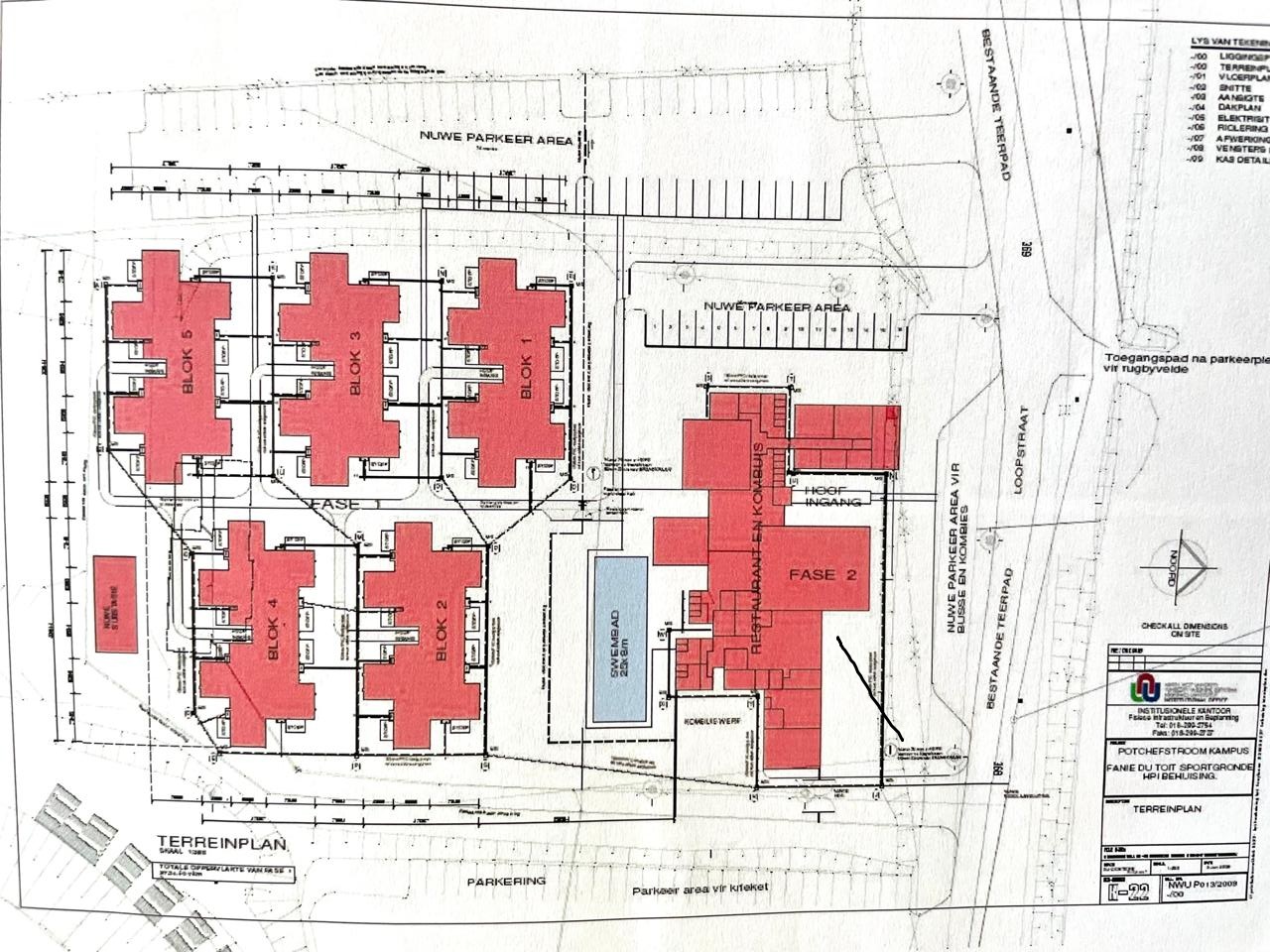
The site plan of the Sports Village. Source: NWU Records, Archives and Museums
The Sports Village was built on former tennis courts of the then defunct Potchefstroom Teachers Training College. The land came into the possession of the Potchefstroom University for Christian Higher Education in the early 1990s when the grounds of the College were consolidated with those of the PU for CHE. The PU for CHE, in 2004, together with the University of the North West at Mafikeng, became the NWU.
The Sports Village consists of eighty double rooms in five double-storey buildings, with a central block housing two conference rooms, a restaurant that seats 160 diners, bar area, three medical rooms and a heated swimming pool of 25 x 8 metres.
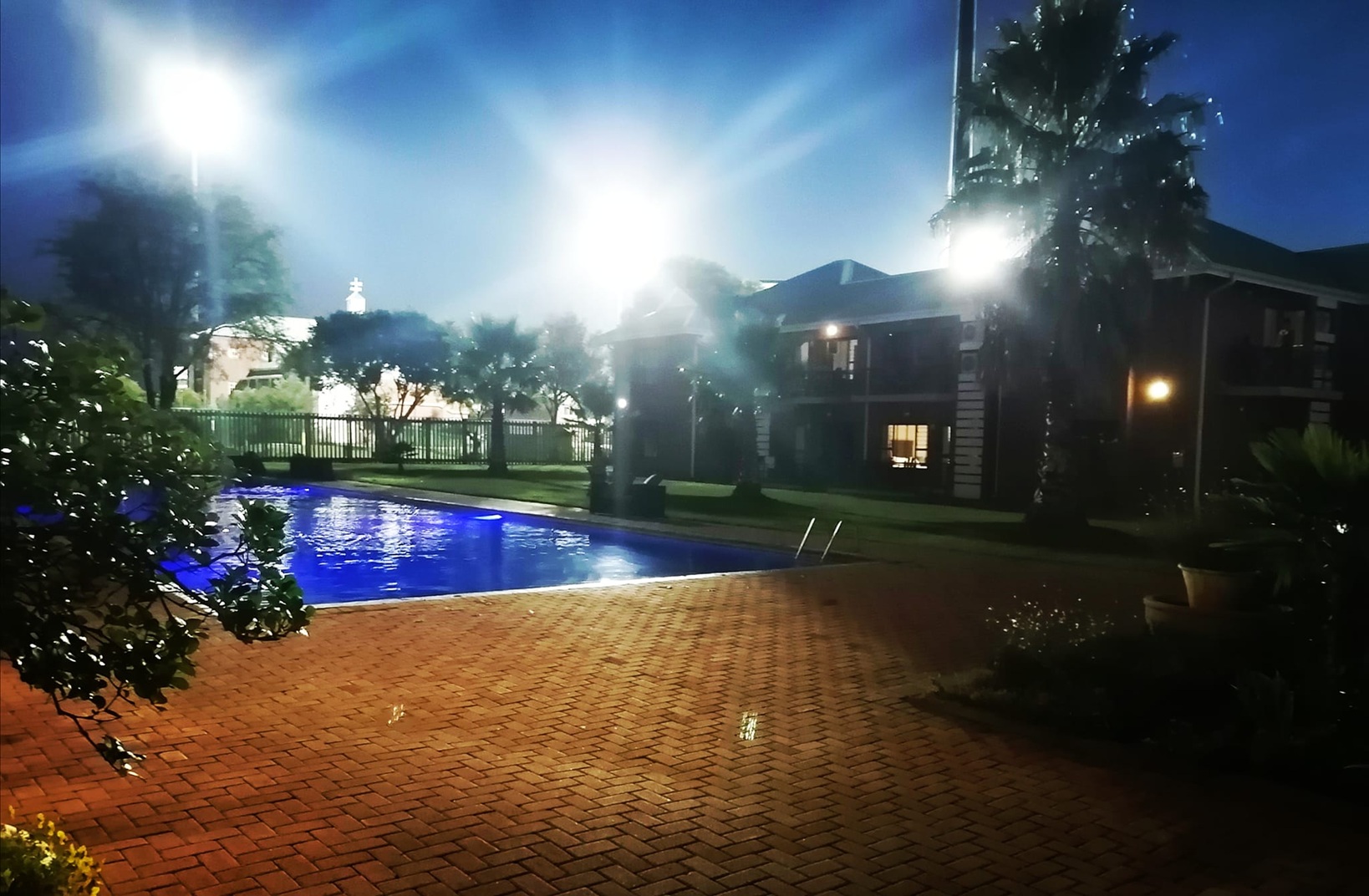
The NWU endeavoured to meet all the requirements of the Spanish soccer team and a heated swimming pool was installed rather late in the building process to do this. Photo: Facebook
The interior decoration was designed to have a modern contemporary theme with “performance driven” as an accent. Every unit or block was to portray a different sport group, being water sports; athletics; national sports such as rugby, cricket; action sports such as boxing, wrestling, fencing, judo, karate; and equestrian sports. This scheme was, however, never executed, according to Mr Johan Duvenhage, who joined the NWU in 2010 and currently is the head of Hospitality Services of the NWU.
Interior decoration and furnishings for the rooms were, however, installed to a cost of nearly R4 million.
Furnishings for other areas such as the conference room, team rooms, reception, lounge, outside area, offices and restaurant cost nearly R1 million.
The Sports Village was planned to be situated close to the High Performance Institute for Sport, described as a one-stop venue for peak performance and state of the art equipment, presenting a complete range of training in sport, related medicine and research, as well as nutrition, assessment and psychological services.
The Sports Village is literally surrounded by the Fanie du Toit Sporting Grounds of the NWU and the JB Marks Cricket Oval. An athletics track, rugby fields, tennis and netball courts and soccer fields are within walking distance.
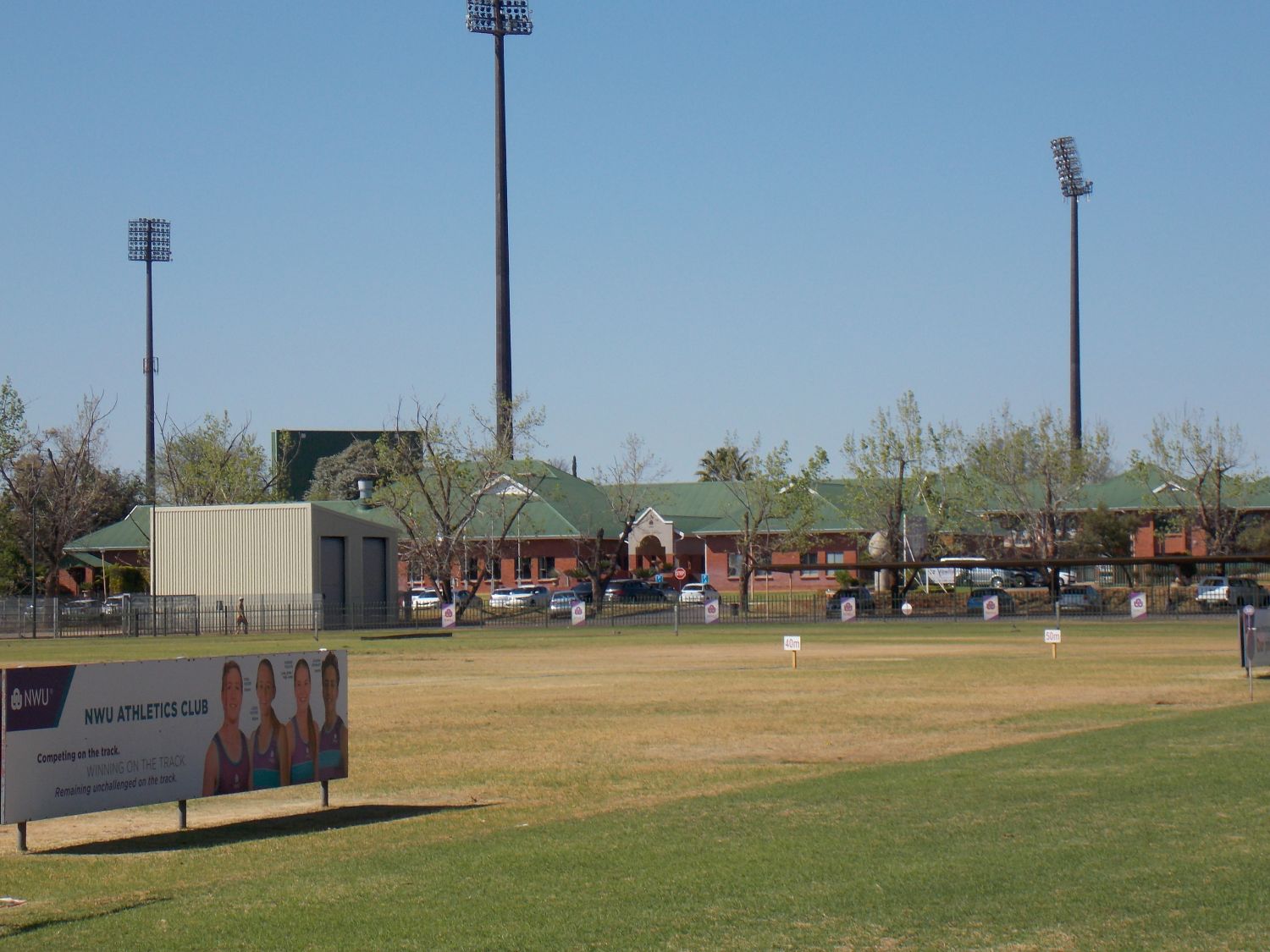
The Sports Village as viewed from the Fanie du Toit Sports Grounds, with the floodlights of the JB Marks Cricket Oval behind it.
According to Prof Annette Combrink, it became known that the Spanish team would prefer a home venue in South Africa on the highveld with its elevated height above sea level and near to the stadium where the last game was to be played, namely the FNB Stadium in Soweto. The team was intent on winning the World Cup from the start and preferred Potchefstroom to Durban which also offered them high class amenities.
Delegations from Potchefstroom visited Spain three times in anticipation of presenting the bid to host their soccer team. “We had a look at their home facilities and amenities and in the end the Sports Village was much better than theirs,” Prof Combrink said.
Potchefstroom complied with all their requirements, even having a heated swimming pool installed rather late in the building process.
Building work progressed at a clipped pace, in spite of heavy rain falling at the time. One unit was completed by February 2009 for a Spanish delegation to inspect.
The Sports Village was officially opened by the Rector of the Potchefstroom Campus, Prof Herman van Schalkwyk on 13 March 2010.
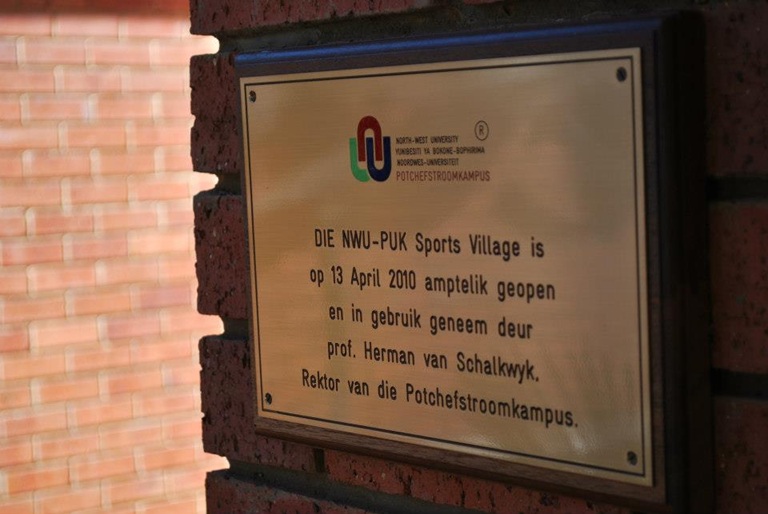
For the visit of the Spanish soccer team, the nearby existing soccer field and its cloakrooms were also extensively upgraded to comply with FIFA specifications and standards to be used for training purposes. Lighting around the field was improved to facilitate television broadcasts at night. The Spanish team stayed at the Sports Village next to the Fanie du Toit sports field for the duration of the 2010 FIFA World Cup.
Spanish fever gripped Potchefstroom in anticipation of the visit of the Spanish soccer team. The municipality had signboards in Spanish installed at all entrances to the city indicating the way to the soccer fields right next to the Sports Village where the Spanish team was to practice. By 2025, 15 years after the World Cup, some of these signs still existed.
At the Sports Village photos of the Spanish team were displayed in the reception area of the Sports Village. The Spanish team brought their own chefs and a chef from the Sports Village got a recipe for a Spanish calamari and rice dish from them, that was later included in the menu.
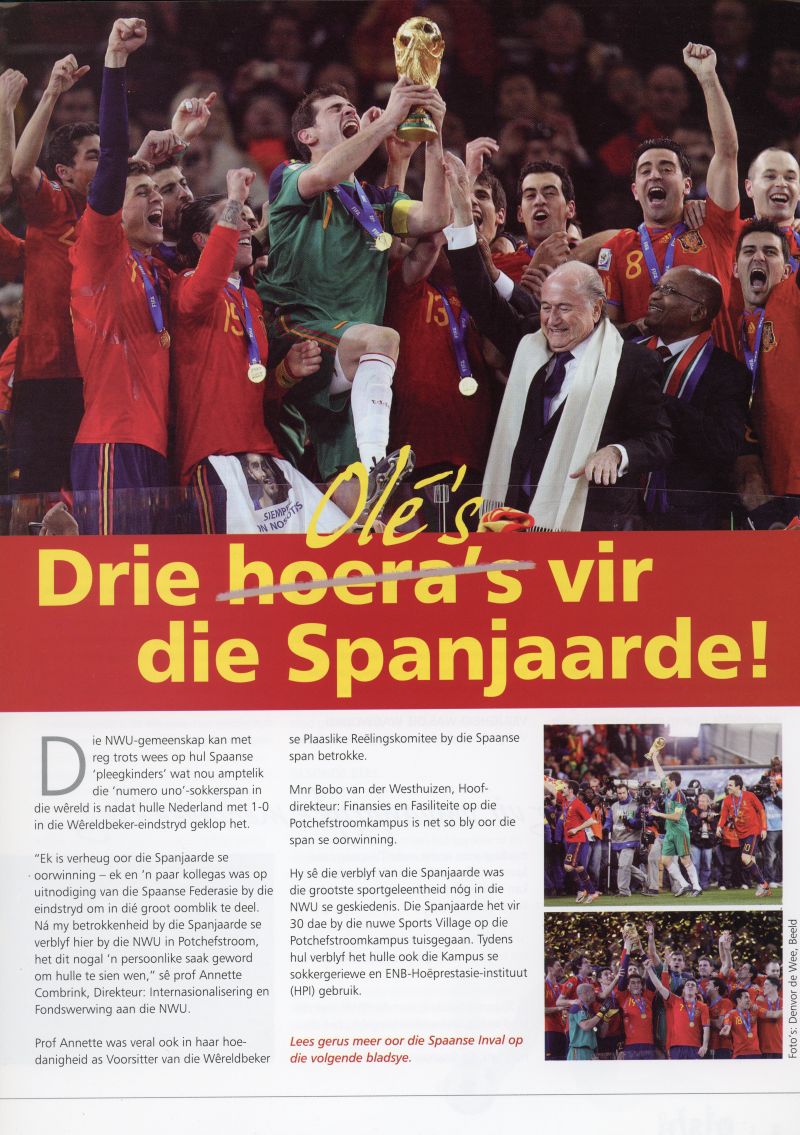
The Spanish team won the 2010 FIFA World Cup. Although the trophy never made it to Potchefstroom, the city was overjoyed. EISH, the staff magazine of the NWU, published this photo that was taken when the Spanish team received the trophy.
When the Spanish Team won the World Cup all the trouble and expenses incurred to build the facilities seemed to be worth it and also brought fame to Potchefstroom as the hosts of the team. It was also said that their hospitality was the deciding factor in the Spanish victory.
To commemorate the visit of the Spanish soccer team, an art installation, being a stylized soccer ball turning on a pedestal by the artist, Anton Smit, was installed. This, however, deteriorated over the years and was recently extensively damaged during a storm. Attempts to have the “cement finish” repaired was unsuccessful. It was painted red and installed at the office of the Director: Residence, Catering & Fleet Services at building A3B. It has since come to be known as the “pin drop”.
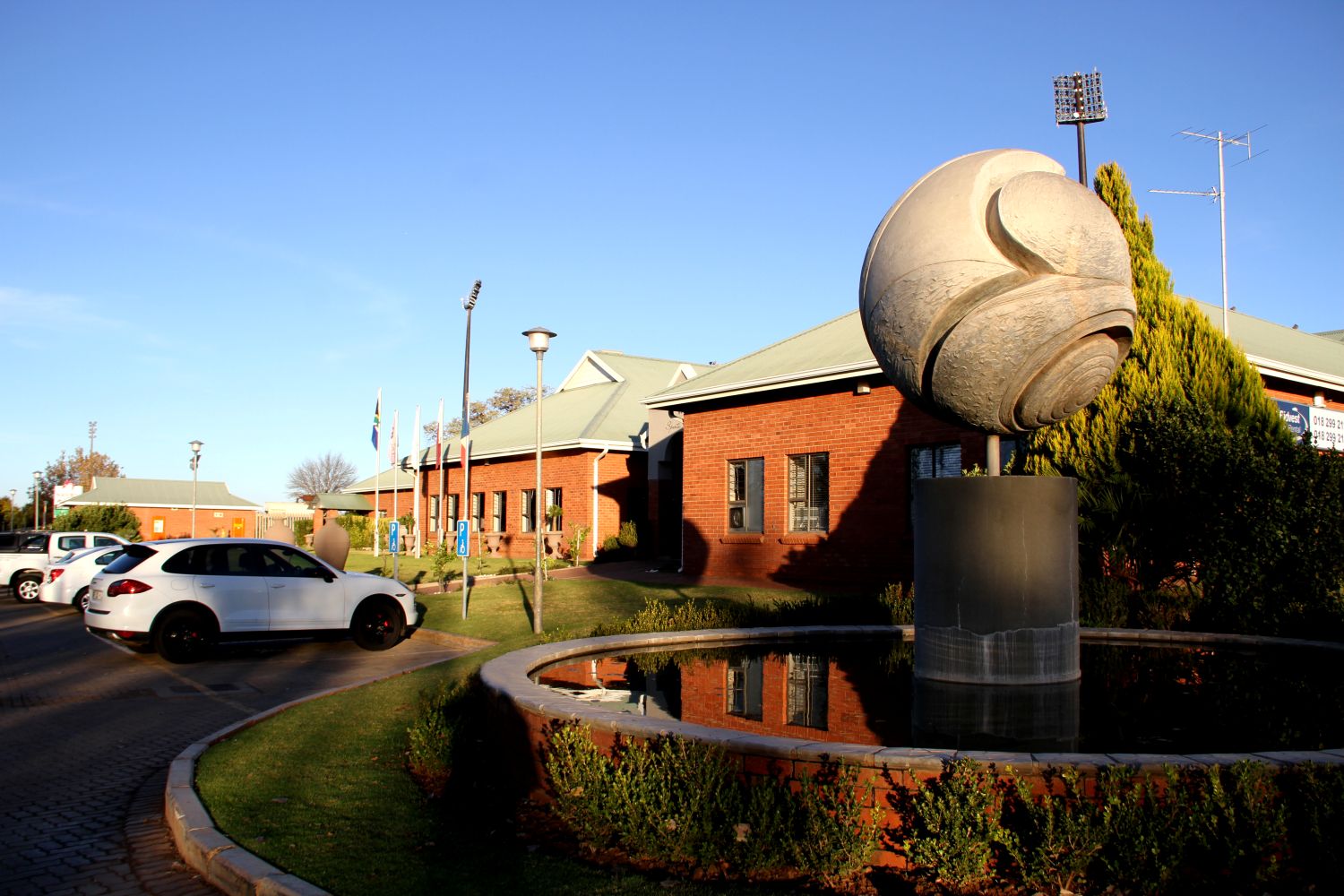
The soccer ball monument was installed to commemorate the visit of the Spanish Team. It was, however, recently damaged during a storm and had to be removed. Photo: NWU: Residences, Catering and Fleet Services
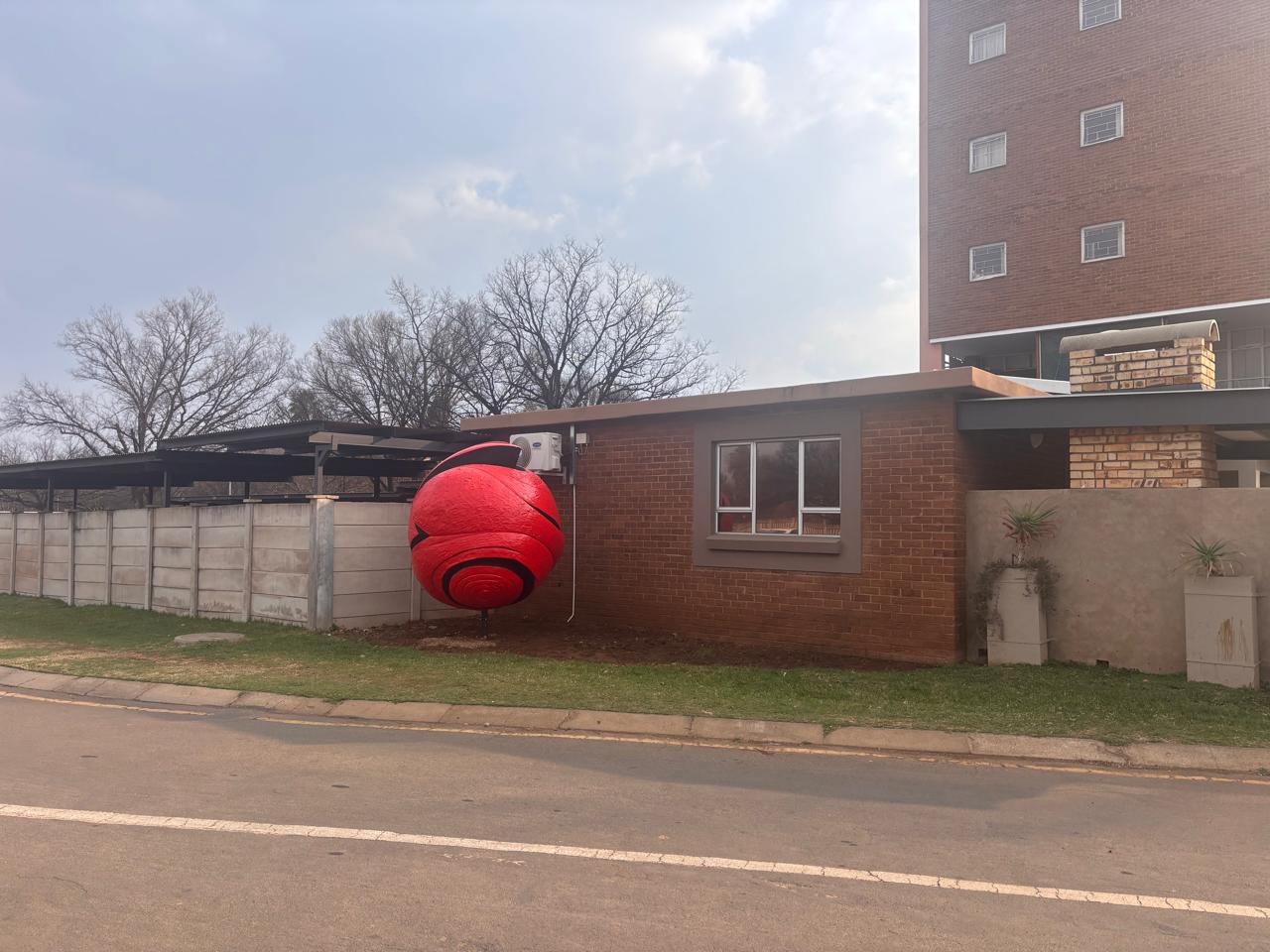
The soccer ball monument now lives it second life at A3B. It was painted red with black accents and installed at the offices of the Director: Residences, Catering and Fleet Services. NWU: Residences, Catering and Fleet Services
By 2025 the Sports Village is bursting at its seams with demand for accommodation must higher than what is available.
During the years a number of international athletes and teams had stayed at the Sports Village. Johan Duvenhage recalls that the Argentine rugby team came twice in short succession. Amongst others the French, English and Polish Olympic teams chose the Sports Village numerous times.
